


AI and Information Governance: Bridging Innovation and Compliance - Act Now

As we step into 2025, the momentum of AI continues to shape the technological landscape. Notably, Microsoft's substantial investment in OpenAI, the visionary force behind Dall-E image generation and ChatGPT chatbot, marks the ongoing significance of AI. The public sector, recognising the transformative potential, increasingly harnesses AI for streamlined administrative tasks and tailored user services.
In this workshop, we delve into the evolving realms of 'AI' and 'Machine Learning,' exploring their integration into both public and private sectors. Emphasis is placed on addressing contemporary challenges, with a focus on GDPR and other information governance and records management issues. Participants will leave with practical strategies for approaching Machine Learning and AI, heightened awareness of key resources, and insights into current best practices, ensuring they stay abreast of this rapidly advancing field.While the utilisation of AI brings immense benefits, it also raises ethical considerations that could impact lives and fundamental rights. Recognising this, our course emphasises the critical role of data protection and information governance officers in comprehending the implications of AI technology and utilising it in a fair and lawful manner. Stay ahead in 2024 by joining our workshop and positioning yourself at the forefront of AI understanding.
Key Topics
- What is 'AI' and 'Machine Learning'?
- What is 'Artificial Intelligence' in all it's senses?
- Where does AI and Machine Learning currently exist in organisations?
- Common areas of challenge based on the Data Protection Principles
- Information & Records Management
- Data Management & Data Quality
- Approaching IG Challenges
- Completing a DPIA on proposed AI/Machine Learning
- Managing risk
- Governance Frameworks
- Example frameworks
- Culture
- Links with other frameworks

Event Information
| Event Date | 17-09-2026 10:00 am |
| Individual Price | From £449 plus VAT |
| Location | Online (live) |
Events









































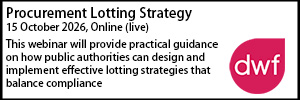


 Minerals webinar series - Part 3: Environmental assessment - Landmark Chambers
07-09-2026
Online (live)
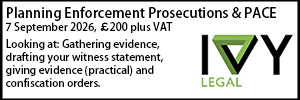
 Planning Enforcement Prosecutions & PACE - Ivy Legal
  Construction Law Update - Hugh James
  Breakfast Briefing on the NPPF 2026: Homes in Connected Places Stations, Density and the New “default yes” - Francis Taylor Building
07-09-2026
London
 Appearing at Local Plan Examinations: Top Tips for making your contribution - Cornerstone Barristers
07-09-2026 11:00 am
Online (live)
Essential climate related law updates across practice areas - Cornerstone Barristers
07-09-2026 3:00 pm
Online (live)
Injunctions: Practical Guidance for Local Authorities and Public Bodies - Francis Taylor Building
08-09-2026
London
 PATC | Prosecution pitfalls - Hugh James
  Welsh Housing Law Masterclasses - 4-5 Grays Inn Square
  Converting leisure contracts to the agency model: best practice and benefits - Blake Morgan
10-09-2026
Online (live)
 Public Law Conference 2026 - Spire Barristers
  AML Compliance Webinar - Devonshires
  Law Enforcement Data Processing and Part 3 of the DPA 2018 - Act Now
10-09-2026 10:00 am
Online (live)
 Introduction to Restructuring and Insolvency: Understanding the Fundamentals for Public Sector Organisations - DWF
10-09-2026 11:00 am
Online (live)
 Certified Data Protection Officer Training (CDPO) - The Training Centre
14-09-2026 9:00 am
Online (live)
Cornerstone on the Court of Protection – Annual Training Conference - Cornerstone Barristers
14-09-2026 9:00 am
London
 HMPL Building Blocks: Defending Disrepair Claims - Law and Procedure - Devonshires
15-09-2026
Online (live)
 Subject Access Requests under the GDPR: A new weapon in the employment claimant’s arsenal? - 42BR
15-09-2026
Online (live)
 Driving Renewable and Sustainable Development in the Public Sector - DWF
15-09-2026 11:00 am
Online (live)
 Lewin Conference 2026 - New Square Chambers
 Register for event alerts
On demand webinars

Sharpe Five Podcast - Episode 1: Understanding Access Injunctions
In this episode, Sharpe Pritchard and Five Paper explore what access injunctions are, why they are used, and the circumstances in which courts may grant them.

The A to Z of Housing Discrimination Case Law: R (FG) v Kensington and Chelsea
Iris Ferber KC and Carolina Bax cover a case which answers some fundamental questions in reasonable adjustments claims relating to housing.

Placements of children in Scotland – implementation of the new law
Justin Gray delivers a pre-recorded webinar covering the latest position in cross-border placements of children in Scotland.

The End of the Acid Test: What Every Advocate and Health & Social Care Professional Needs to Know
Peter Edwards of Peter Edwards Law explores the Supreme Court's decision to abolish the 'Acid Test'.

AI Can See Clearly Now 2026
Jennifer Thelen, Saara Idelbi and Nyasha Weinberg host a pre-recorded webinar on AI Generated Legal Correspondence.

Worth Your Data in Gold
Jennifer Thelen, Philip Dayle and Steph David offer practical solutions to pleading and quantum in data protection claims.

Climate Law Matters: Live
Steph David, Christopher Moss and Ella Grodzinski discuss recent developments in climate law across different sectors and consider emerging patterns that are likely to shape litigation later in the year.

Turning Tensions into Trust: A New Mediatory Approach to Party Walls, Rights of Light and other Neighbour Conflicts
John Pugh-Smith, Celina Colquhoun and Niraj Modha discuss the practical deployment of mediation techniques.
