





























































NISTA on managing PFI contracts

The ban on upward only rent reviews in commercial leases
SEND and out of time disability discrimination claims

Post-placement contact

The English Devolution and Community Empowerment Act 2026

The evolving nature of housing association boards

Enforcing (and defending) the Renters’ Rights Act: Penalties, powers, and practical advice

What will May's local elections mean for strategic development partnerships?

Mayoral Development Corporations and regeneration

Care proceedings, time estimates and parental vulnerabilities

“Knock, knock… or not?”

Education law case update: January – March 2026

Transport regulation and operator licensing
The meaning and application of “freedom of speech” within the law

High Court rules on the service of local authority decision notices by email

Procurement Act 2023 – One Year On - When it starts to get contentious
English Devolution and Community Empowerment Bill receives Royal Assent

Avoiding duplication between planning and licensing

Post award modifications: Analysis of the “Modifications Claim” in TNLC v The Gambling Commission [2026] EWHC 891 (TCC)

Separation of Powers in Wales: Is there a duty to consult before introducing a Bill into the Senedd Cymru?

The Housing Streamlined Subsidy Scheme: What Public Authorities Need To Know

Older children and deprivations of liberty
When EHCP provision and disability discrimination collide

Drawing the line: Civil Restraint Orders in social housing

Urban development – helping overcome obstacles

Individual ward member delegated powers

What next for council consultations?

The right to erasure and unfounded malicious allegations

False statements in licensing proceedings

Assets of Community Value – a sporting revolution
A new generation of development corporations

Further reform for public procurement – The British Goods and Services Bill

Titchfield Festival Theatre - the new chapter. Or not, as it happens

Housing offences and increased penalties

Establishing relevant defects under the Building Safety Act
Companies House Reform: Economic Crime and Corporate Transparency Act 2023

Permission for Take Off: £205m Cardiff Airport Subsidy Authorised by the CAT
New Regulations for the Use of AI in Court Documents?

The Employment Rights Act 2025: What Public Sector Employers Need to Know

Expert evidence in children proceedings: principles for practice and better outcomes

Children law update - Easter 2026

Officer reports and decisions to close care homes
Ordinary residence - Worcestershire revisited?

Good practice in post-adoption contact

An ‘intolerable’ deprivation of liberty – and the need for reasons

DfE land transactions guidance 2026: For academy trusts and schools
The neighbourhood health framework
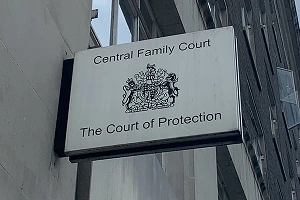
Capacity as a social construct, and the problem of untangling the spider’s web
Public money and double recovery

The new Housing Streamlined Route
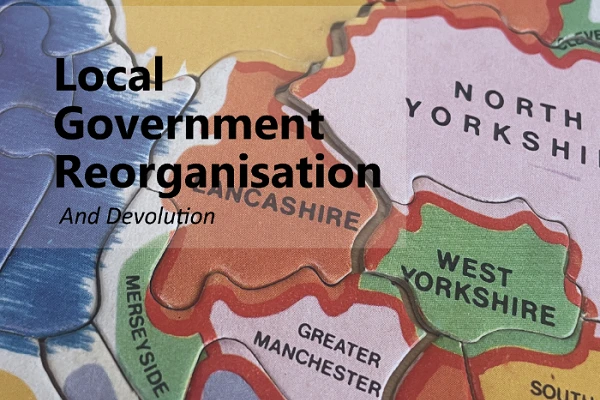

For years, FTS, a drug, alcohol and DNA lab in Yorkshire, has been advocating for an end to the use of Society of Hair Testing (SoHT) cut-off levels in the family courts, writes Paul Hackett (Sponsored Editorial)
SoHT cut-off levels are a benchmark for interpretation which can be set independently of whether a drug has been detected or not. If a drug has been detected, but below the cut-off, it will be reported as “Not Detected” or “Negative”- just like drugs which have not been detected at all.
Whilst the SoHT cut-off levels provide useful guidelines to aid interpretation, numerous factors influence measured drug concentration within an individual’s hair, and as such each case is unique. It therefore makes little sense to apply, as many labs do, a set threshold concentration as the single determining factor to decide if someone is a drug user.
Research from 1991, ten years after cut-off levels were introduced, demonstrates that the use of cut-off levels to interpret hair strand testing results discriminates against those who have darker hair, impacting black and ethnic minority backgrounds in particular.
FTS was curious what results we would get if we applied SoHT cut-off levels to some of own historical data. We took 3,000 of our previous cases where we had recorded outcomes from declared usage and other forms of testing (such as nail testing), then applied standardised cut-off levels to them. The results were startling:
• 12% hair samples in cases not using heroin came back Positive
• 18% hair samples in cases not using cocaine came back Positive
• 22% hair samples from chronic heroin users came back Negative
• 20% hair samples from chronic cocaine users came back Negative
• 60% hair samples from chronic cannabis users came back Negative
At first glance, such results may suggest that hair strand testing evidence is unreliable. But this is not the case. The authorities of Re D (Children: Interim Care Order: Hair Strand Testing) [2024] EWCA Civ 498 underscore the case of H (A Child – Hair Strand Testing) [2017] EWFC 64 in establishing the science behind hair strand testing as sound. It also makes clear that hair strand testing is opinion or expert evidence and needs to be looked at in the context of the wider evidential picture.
In other words, the science behind hair strand testing is reliable, but the interpretation of that evidence must be carried out with care and fully contextualised to avoid results being viewed as “pseudo-certainty”. Our results clearly show how, when cut-off levels are applied with little regard to the specificities of each individual’s case, results can mislead. When the results from testing of hair are interpreted simply by reference to standardised cut-off levels, such false positives and negatives will arise. As such, there is a risk of miscarriages of justice when hair strand testing is treated in isolation and not contextualized.
The alarming results above show how important it is that hair strand testing is properly instructed from the outset, with full regard for the client’s individual circumstances, including factors like hair colour, lifestyle, passive exposure and hair treatments, among others, and for this evidence to be treated as expert opinion evidence, not just as numbers.
 As a laboratory that never uses cut-off levels, FTS would like to make some suggestions about how hair strand testing evidence should be instructed by the family courts:
1. Hair strand testing, in conjunction with nail testing, should be instructed as expert evidence by way of a letter of instruction or agreed questions recorded in the order. FTS can help with template letters, along with proposed standard wording for an order instructing this expert evidence.
2. The use of cut-off levels must stop. This is expert evidence that should be instructed on this basis. Interpretation of results must have regard to all relevant factors and not simply with reference to standardised cut off levels. Laboratories should always present the courts with a full picture of all findings, no matter whether they are found to be above or below a cut-off level. Testing companies must provide the legal system with a full evidential picture in order to ensure a child is not left in an unsafe living situation or removed from their parent due to misleading results.
3. Local authorities and lawyers should be better informed about how to understand and challenge disputed results that have used cut-off levels, in the same way a contested paediatric report or radiological report might be challenged in a non-accidental injury case.
4. Testing companies should factor in all legal developments on hair strand testing and stop arguing that cut-off levels are a valid method in the family courts.
In summary, forensic evidence should never be filtered before it is presented in court. When the future of a family hangs in the balance, as is often the case when hair strand tests are instructed for the family courts, forensic toxicology results must be presented in full and interpreted as accurately and with as much context and explanation as possible.
Paul Hackett has served as managing director of Forensic Testing Service (FTS) since 2024. He began his career with the Home Office Forensic Science Service (FSS). Following the successful launch of the world's first National DNA Database in 1995 Paul served on the FSS Management Team to support the expansion of the UK Police’s DNA testing and operational capacity. In the years since he’s worked across several operational and commercial roles at the FSS, Eurofins, Key Forensic Services, in addition to establishing Key Forensic Solutions Ltd.
About FTS
FTS was set up with the sole purpose of providing specialist drug, alcohol and DNA toxicology services and expert interpretation for Family Law and Child Care Proceedings
FTS offers comprehensive forensic toxicology services, providing laboratory analysis and expert opinion evidence tailored for family court cases. Our services are designed to support legal teams, social workers, and the judiciary in making informed decisions about the welfare of a child.
Our forensic lab is accredited to ISO/IEC 17025:2017 and Lab 51 (toxicology lab) standards. We are also certified by the Society of Hair Testing and the Society of Toxicological Forensic Chemistry.
To instruct FTS expert opinion and toxicology services, please contact the FTS Customer Support Team on 01924 480272 or Email
Website: https://www.forensic-testing.co.uk/
Features List

Procuring Light Touch Frameworks Under the Procurement Act 2023: FAQs for Commissioners and Procurement Teams.

Judicial review of sports governing bodies

AI use and the hidden risk to legal privilege

Managing and modifying light touch frameworks under the Procurement Act 2023: FAQs for commissioners and procurement teams

Analysis of the “process claim” in The New Lottery Company Limited v The Gambling Commission and Allwyn Entertainment Limited and Others

Local Government Reorganisation: a practical update to Section 24 controls

The ERA – union and enforcement changes webinar
How Sharpe Pritchard Can Help with a Mid-Term PFI Contract Review

King’s Speech: Clean Water Bill to Shake up Water Industry

Living Through Local Government Reorganisation

Revealed: Public sector most exposed to risk from rising energy bills

Commonhold Reform in Focus: Implications of the Draft Bill

Regional Care Cooperatives: a path found

AI in Education: Why Data Protection Must Come First

Allergy management in schools

The care leavers deaths review

Guidance for schools on the mobile phones ban

Mental health crisis care: legislative challenges in emergency departments
Governance of Council Companies

The date for assessing whether requests are vexatious or manifestly unreasonable
Jobs















































Principal Solicitor
Litigation Lawyer (Local Government)

IRM Legal Advisor (Casual)

Lawyer / Solicitor x2 - Children & Young People/Education

Solicitor: Children's Safeguarding

Solicitor - Planning and Highways
Lawyer / Solicitor - Adult Social Care & Integrated Health Team

Head of Strategic Litigation
Locum roles
Directory














Events


















































 Certified Information Privacy Manager (CIPM) - The Training Centre
  Law Enforcement Data Processing and Part 3 of the DPA 2018 - Act Now
01-06-2026 10:00 am
Online (live)
 LIDW 2026: What Next for the UK as a Leading Centre for Dispute Resolution? Arbitration, Mediation, the Courts and Commercial Reality - 39 Essex Chambers
03-06-2026
London
 LIDW 2026: Enduring Foundations, High-Stakes Futures: Navigating Nuclear Project Disputes in a New Era of Energy Demand - 39 Essex Chambers
03-06-2026
London
 Drawing the Line: Handling Serious Misconduct Cases and Statutory Referrals in Education - Sharpe Pritchard
04-06-2026 9:30 am
Online (live)
 Minerals webinar series - Part 1: Minerals plan-making: the next phase - Landmark Chambers
08-06-2026
Online (live)
 Tackling London’s temporary accommodation crisis: a Project 123 call to arms and Temporary Accommodation Network event - Devonshires
08-06-2026 9:00 am
London
AI and Information Governance: Bridging Innovation and Compliance - Act Now
08-06-2026 10:00 am
Online (live)
 PATC | Planning and Development Conference - Hugh James
  Government contract templates - DWF
  LPAs and the DCO Examination Process - Practical Tips for LPAs - Francis Taylor Building
09-06-2026 1:00 pm
London
 Public Rights Over Land Conference 2026 - New Square Chambers
Supported Housing Consultation: the Government's response and what is to come - Devonshires
Public Rights Over Land Conference 2026 - New Square Chambers
Supported Housing Consultation: the Government's response and what is to come - Devonshires
11-06-2026 11:00 am
Online (live)
 Managing Inquests: A Practical Guide for Local Authorities - Devonshires
  Kings Chambers Property Flagship | Laying the Foundations (Leeds)
  Talent management: the legal and practical issues involved in recruitment and retention - Blake Morgan
16-06-2026 10:00 am
Online (live)
