





















































The latest Sizewell C JR

Impecuniosity and other issues in credit hire claims

Anti-Money Laundering: Key Issues for Local Government Legal and Governance Teams

Arts and Culture, Community and Regeneration: The Two New Streamlined Subsidy Routes

Disclosure to the DBS

The CAT and the New Lottery Subsidy Control challenge

Gender-questioning children under draft KCSIE 2026

Accelerating the planning appeals process: unintended consequences
The convergence of DRS, Simpler Recycling and EPR

Reserve below-threshold contracts for UK or local suppliers under the 2026 Order

CMO Principle and Financial Assistance Further Clarified in Latest CAT Judgment on Subsidy Control

Make Europe Build Again – The EU Industrial Accelerator Act

Affordable housing funding news & unlocking S106 units

The Social and Affordable Housing Programme 2026–2036: new guidance

Housing case alert - February 2026
Residential developments: new section 106 delivery roadmap

The Renters Rights Act and social landlords
Assured tenancies: written statements and information sheets

The Procurement Act 2023: One Year On - How procurement processes are evolving
Book review: “Reforming lessons”

Service charge recovery and the Building Safety Act 2022
The draft NPPF consultation: what’s new

Mobile phones, AI and schools

Transparency in FII cases
Court documents and AI

Next steps for the LGPS after the access and fairness consultation

What is an Officer?
The High Court on the EHRC’s “interim update”

Substituted decision notices and contempt of court
Social media guidance for members
2026 in construction: a look ahead

Track allocation in housing disrepair claims

Withdrawing applications for care orders

Appropriate professional boundaries for teachers
Children under 16 and deprivation of liberty
A Welsh white leopard?
Conversion to an ‘empty’ MAT

Obvious risks: the beautiful game
Development, flood risk and planning judgment
Timed out?

Heat Network Zoning: What the Government’s 2026 Response Means for Local Authorities

A National Security Assessment: Biodiversity Loss and Ecosystem Collapse – Implications for Infrastructure and Energy

The Community and Regeneration Streamlined Route: frequently asked questions

To lot or not to lot?

Judicial review: prematurity, standing and the correct forum

Sex discrimination and gender reassignment: the Darlington nurses case

New electrical safety regulations for social housing

Restrictive interventions and seclusion in schools

The Mayor of London's strategic planning role

Updates to the Social Partnership and Public Procurement (Wales) Act 2023 in 2026

Ian Andrews looks at the place of environmental health teams at a time of local government reorganisation and devolution.
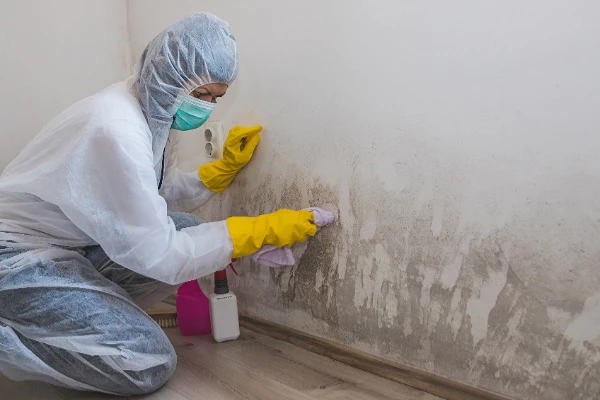
In 1943, the onset of the use of penicillin as an antibiotic offered both the British and American armies the opportunity to counteract infection in battle wounds and to cure other infectious diseases. Let us call this a “43 moment” from a health point of view. Whilst supply was limited, particularly to the British, the drug was a helpful "shot in the arm". As parts of England consider the consequences of the Government's plans for devolution, alongside local government reorganisation in 21 counties, there is a pressing need for certain professions to be given a "shot in the arm" if current Government aspirations are to be deliverable.
The introduction of the English Devolution and Community Empowerment Bill into Parliament comes at a time when budget cutbacks have had a chronic effect on professional workforces. For a less visible workforce, like environmental health, these effects have been tangible, even though the Covid-19 pandemic offered a clear opportunity for the profession to demonstrate what it was capable of, and what a fundamental part of the public health workforce they are.
Environmental health as a discipline enables people to exist in an environment where risks to their wellbeing are identified, explored, and mitigated, but there aren't enough Environmental Health Practitioners (EHPs) around, or being trained, to work within new local government structures to provide advice and take action to protect the wellbeing of different communities. Where environmental health teams will sit in the as-yet-undecided unitary and strategic authority structures, and how they will support the strategies of regional mayors, is all up for debate, such is the connectedness of environmental health. The Chartered Institute of Environmental Health (CIEH) believes they should be closely aligned with public health teams because of obvious legal linkages.
The Bill gives us a modern ’43 moment’ in the form of Clause 43, which focuses on health inequalities and public health. Two amendments to this clause were tabled by MPs at the Bill’s Committee Stage. These would have served to raise the profile of particular environmental health issues, and thus the value of the profession. One amendment sought to add certain "environmental harms" onto a list of general health determinants that would be mandatory for new strategic authorities to consider; the second amendment was more specific and adopted complementary wording. The government’s response to the amendments was that the clause was written to encompass a wide number of general health determinants and that the Environment Act 1995 already requires combined and county combined authorities to work with local authorities on air quality plans for their areas.
Whilst neither amendment was carried forward, it shows that there is a background desire for more action and recognition of impacts from low air quality standards and other environmental harms. The call for air quality to be a basic human right (known as “Ella’s Law”) is but one “harm” where there are legal developments to watch. Environmental Health Officers - as they are known in local government structures - understand these harms in depth and are able to adopt advisory or enforcement tactics to minimise their impact on different communities of climate change.
As devolution and restructure plans are developed and rolled out over the next few years, the Chartered Institute of Environmental Health (CIEH) are very open to engaging with different decision makers at the unitary, strategic and national level to help influence and support change. As a professional body, we want to see environmental health, and thus public health outcomes, high up on the agenda, just as the fitness of soldiers was a pressing concern at a previous ‘43 moment’ and penicillin was used to achieve that long term objective.
Ian Andrews is Head of Environmental Health at the Chartered Institute of Environmental Health.
Jobs










































Senior Lawyer - Community Services

Director of Governance

Senior Lawyer
Principal Lawyer - Community Services Team

Lawyer / Senior Lawyer

Qualified Lawyer
Locum roles
Directory












Events










































 Understanding GDPR Accountability and Conducting Data Protection Audits - Act Now
02-04-2026 10:00 am
Online (live)
 How to Handle a Subject Access Request - Act Now
CCTV, Drones and Body Worn Cameras: Ensuring Data Protection Compliance - Act Now
How to Handle a Subject Access Request - Act Now
CCTV, Drones and Body Worn Cameras: Ensuring Data Protection Compliance - Act Now
10-04-2026 10:00 am
Online (live)
 Devolution and Local Government Reorganisation: beyond planning - Landmark Chambers
13-04-2026
Online (live)
 HMPL Building Blocks: A Housing Officer’s Guide to Court Proceedings - Devonshires
14-04-2026
Online (live)
 Local Authorities Invited to Specialist Training on Judicial Review Risks in Planning Decisions - 4-5 Gray's Inn Square
  Lessons learned in 2025 - a public law update - 42BR
  Certified Data Protection Officer Training (CDPO) - The Training Centre
20-04-2026 9:00 am
Online (live)
 Getting it right first time: Making lawful decisions (Webinar Series) - Public Law Project
21-04-2026
Online (live)
Rating Nuts and Bolts webinar series: Occupied, unoccupied and rates mitigation - Landmark Chambers
21-04-2026
Online (live)
 39 Essex Chambers Half-Day Construction Conference in Leeds - 39 Essex Chambers
22-04-2026
North-east
 Introduction to Judicial Review - DWF
  What’s a fair grade? Academic assessment and the duty to make reasonable adjustments - 3PB
22-04-2026 11:00 am
Online (live)
 Public Sector Insights: Managing risk in construction contracts - Blake Morgan
23-04-2026
Online (live)
AI and Information Governance: Bridging Innovation and Compliance - Act Now
23-04-2026 10:00 am
Online (live)
